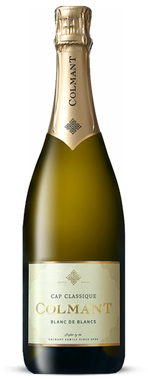
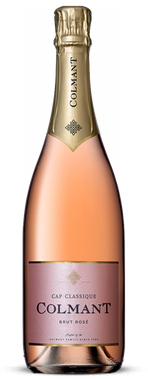
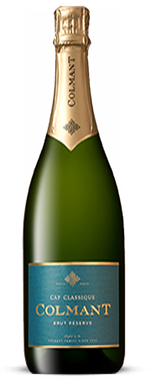
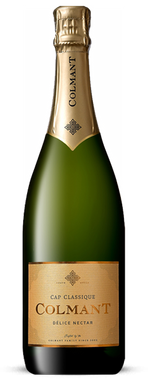
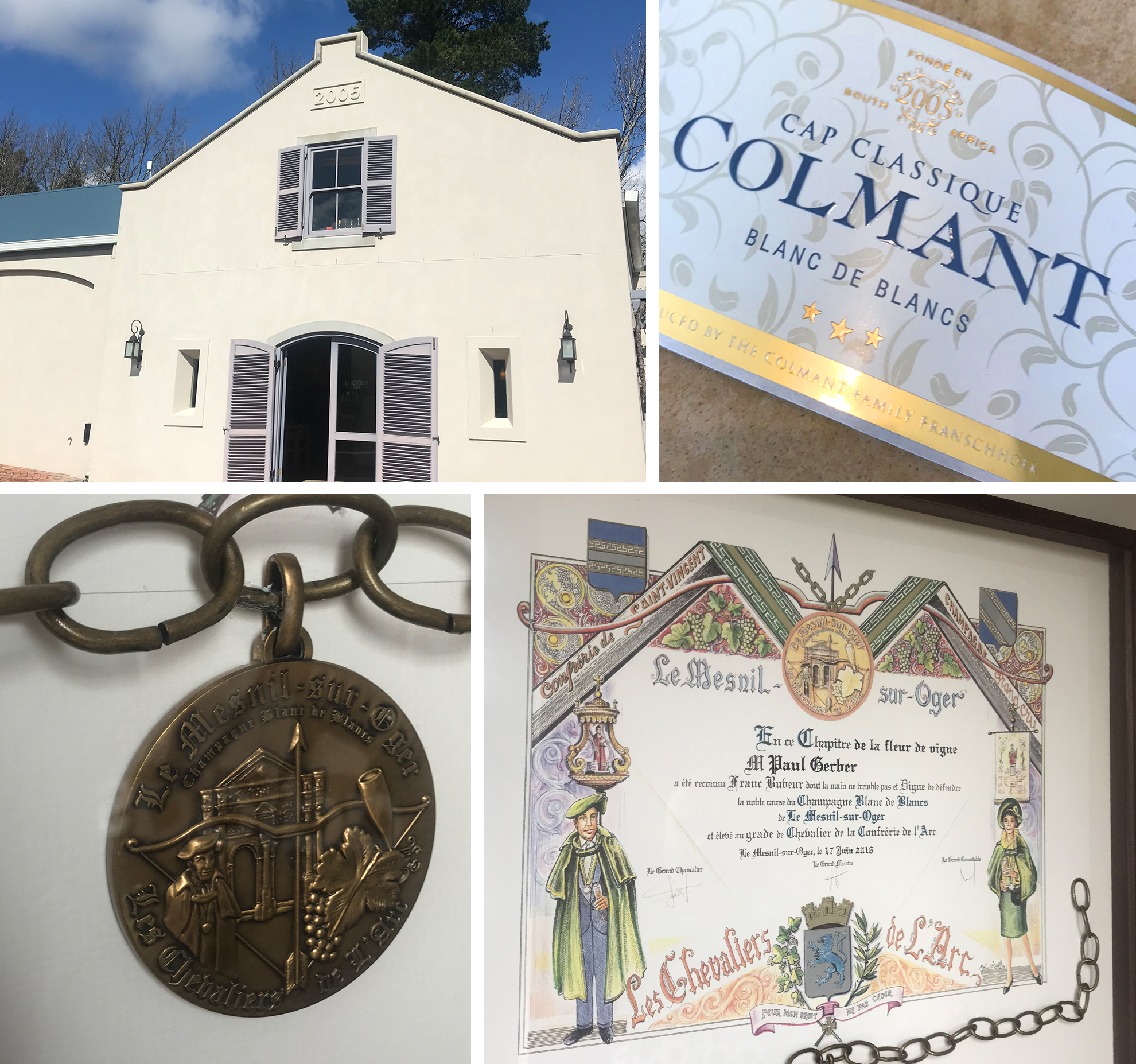
And he is, of Les Chevaliers de L’Arc, the order of the Bow Knights tasked with the preservation of all things good and fair, as initiated by the Knights of the little Champagne town Le Mesnil-sur-Oger. Paul’s particular mission being in defense of the noble cause of Champagne Blanc de Blancs, with the medal to prove it. The town itself is designated Grand Cru and as such only cultivates Chardonnay grapes boasting two of the most prestigious houses in Champagne: The House of Salon and the walled vineyard of Clos de Mesnil, which is owned by the House of Krug. Both these houses only produce champagne in favourable vintages, in further defence of the noble cause of Champagne Blanc de Blancs. Paul loves this town and visits it almost every year, something he told me while he was still the winemaker at Le Lude. He has since moved on to Colmant Cap Classique, literally just down the road, leaving Le Lude’s winemaking in the capable hands of Emma Bruwer. You see, Paul is a many-faceted man. He now sits on the board of the Cap Classique Association, together with Pieter Ferreira (of Graham Beck) and JP Colmant (owner of Colmant), while also pursuing a Masters in Winemaking at the University of Stellenbosch AND making Cap Classique at Colmant. Though many-faceted, the pursuit remains the same: In Defence of Chardonnay.
Cap Classique
The Cap Classique Association is dedicated to improving the quality of South African Méthode Cap Classique by encouraging longer maturation periods, whole-bunch press and exploring different categories of Cap Classique. In an effort to redefine the category they insist on the title ‘Cap Classique’ and have put together an impressive list of member farms to support the cause, a boon to the South African wine industry as a whole through the formalisation and inherent quality control of organisations such as these. With people like Pieter ‘Bubbles’ Ferreira, Paul and JP of Colmant at the helm there is a great amount of energy present, tension if you will, traits very much prized in a well-planned bubble.
Henry’s Law
The art of making bubbles is steeped in science, thereby speaking to the Maths teacher in Paul - in a previous life his vocation had been to coax young men and women into mathematical submission. He references Henry’s law, which BASICALLY says that the solubility of a gas in a liquid is equal to the partial pressure of the gas OUTSIDE the liquid… yes, me too, something about the fizz when you open the bottle right? What I KNOW about Champagne and Cap Classique is two-fold: 1. To preserve the bubble in an opened bottle of MCC you need to put a teaspoon in the bottle. 2. The smaller the bubble the better the wine. Two facts Paul quickly dispels. 1. The TEASPOON does not, in fact, preserve the bubble, it's usually the cold of the refrigerator you put said bottle and teaspoon in that slow down the bubbles. Though the teaspoon might act as a conductor of the temperature, it is not, in fact, the teaspoon, but the COLD. 2. The smaller the bubble, the less CO2 in the wine! Some big champagne houses now tend to add less sugar and yeast in the second fermentation to avoid excessive CO2 production and pander to the widely held belief that the smaller the bubble the better the wine. Paul further contends that it is not, in fact, the SIZE of the bubble at all, but the very TEXTURE of it. And the subject of his Masters' investigation.
Soft Bubbles
Paul argues that maturation ON the cork elicits a much softer, elegant and flavourful bubble than prolonged maturation on the crown cap. In most instances, the second fermentation inherent to the Méthode Cap Classique occurs on a crown cap. Paul’s experimentation with the Agrafe method at Le Lude, which sees the use of cork and staple during the second fermentation, had turned him on to the theory that the crown cap produces a more linear, acidic bubble. When second fermentation occurs on the cork it basically does the job of maturation, softening the bubble, imparting the brioche-like flavours, and producing a much more elegant wine. Paul has since refined his theory saying that the second fermentation doesn’t necessarily have to happen on the cork, but can just be disgorged earlier for a longer ageing period on the cork to attain a similar effect. When asked what grapes are well-suited to this approach, the answer is a resounding: CHARDONNAY. Paul advocates the Brut Zero as the ultimate expression of the grape, with no additional sugar added to influence the CO2 content, letting the grape speak for itself.
While Paul was well-known at Le Lude for his use of the Agrafe method, the beauty of who Paul is, is the constant flux of his endeavours, very similar to that of a Champenoise bubble. At Colmant his first order of business was to change the title of the ‘Brut Chardonnay’ to ‘Blanc de Blancs’, as is his plight, and institute vintage wines, as Colmant had previously only produced Non-Vintage wines. The ageability of Cap Classique wines remain undefined, though the consensus is that ageing is KEY - we’re just not sure yet, how MUCH. It is indicative of the importance of ageing that Paul’s wines at Colmant will only be released in a couple of years yet. The Cap Classique Association, therefore, to me, stands as the Research and Development arm of South African Cap Classique, the members of which represent a thriving community of like-minded, passionate individuals whom I’m eager to support. People like Paul and JP Colmant are integral to making Cap Classique great (not again, but for the first time) and we invite you to sample the wines of Colmant to find out just what attracted Paul to it in the first place. The quality of the Chardonnay perhaps?