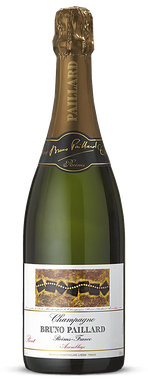
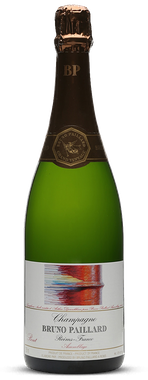
Or at least that is the sentiment – we ARE dealing with CHAMPAGNE mind you, the birthplace of Krug, Dom Pérignon, Cristal and the like, so that’s a hefty statement to make. One deserving of further investigation.
As a novice to Champagne, never having thought to venture beyond our own Cap Classique and its more forgiving price tags I literally FELL headfirst into possibly one of the finest Champagne houses there is. I’m lucky like that, though one might question this perceived ‘luck’ if it ruins you for anything BELOW said standard and its more approachable price tag. It’s like when I realized that 4G wines were not made for ME, they were made to be the best, to be the ultimate representation of a terroir to the WORLD.
How Bruno Came to Africa
By happy coincidence, it was our friend, Philipp G. Axt of 4G wines who introduced me to Bruno Paillard’s Champagne. He is, in fact, their sole distributor in Africa, not that Philipp would be just anyone’s agent. Knowing the 4G story, it would seem that Philipp just HAD to meet Bruno 6 years ago at a Wine Expo in Bordeaux. Typically, Philipp was on the trail of beautiful hinges for his wine cases, which Bruno had. Philipp decided to wait to speak to Bruno and ended up spending the rest of the day with him, as he phrases it ‘the happy victim’. What Philipp discovered of Bruno so resonated with him and his own practices in South Africa, that the collaboration was merely a natural progression of things.
A Champagne Advocate
NOW, as a Champagne novice you best believe I did my homework. One cannot make a statement like ‘Nec Plus’ in Champagne without being able to back it up. One of the youngest Champagne houses in Champagne, Bruno Paillard comes from a long line of brokers and growers dating back to 1704. When Bruno started working as a broker in 1975 he quickly decided he wanted to create a different Champagne, one representative of the WHOLE terroir. It would be pertinent to note here that Bruno was the manager of the “Commission on Defense of the Appellation” for more than 20 years and has been the elected administrator of the Union des Maisons de Champagne since 1989. Hence an advocate of Champagne, with the wine to prove it. In 1981 he sold his old, collector’s Jaguar to start Bruno Paillard Champagnes and implemented a set of rules to ensure only the very FINEST Champagne was produced.
The Rules
They are:
- Only the highest quality grapes are selected, irrespective of whether they come from a Grand Cru site or not.
- Only the first pressing is used.
- All the grapes are vinified separately according to varietal and origin, allowing each to attain its fullest expression of self.
- Reserve Wines are utilized for multi-vintage Champagnes, these are wines already blended from the year before (each of these then including 25-50% of Reserve wines from the previous year, dating back to 1985).
- The wines are aged 2 to 4 times longer than the legal requirements of Champagne (3 to 10yrs).
- Dosage is always extra brut, meaning it contains only a maximum of 6 grams per liter, to respect the natural purity of the wine as an expression of its terroir.
- And the resulting wine always rests after disgorgement for 5 to 18 months. They describe disgorgement almost like a trauma the wine experiences, which then means, the older the wine, the longer the period of convalescence.
12 Grand Cru Hectares
Added to these, Bruno had the advantage of his family’s relationships with growers in the Grand Cru villages of Bouzy and Verzenay from which he continued to purchase grapes for his own Champagne. In 1994 he actually purchased his first vineyard, which included three Grand Cru hectares in Oger in the Côte de Blancs. Today Bruno Paillard farms 32 hectares, including 12 Grand Crus that provide 70% of the grapes the House requires, with the rest sourced from his original growers from more than 30 villages. Remember that there are ONLY 17 Grand Cru appellations in the whole of Champagne, which is made up of 320 villages. Meaning that only 5% of all of Champagne is Grand Cru, while a whopping 37.5% of Bruno Paillard’s vineyards are. The various blends of the multi-vintage wines remain house secrets, though the available selection of terroirs promise something spectacular and uniquely Champagne.
The 5 Stages
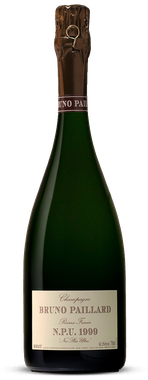
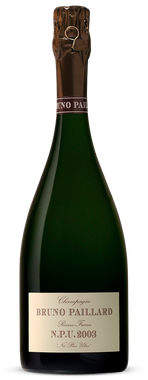
When it comes to the champagne, there are varying levels of maturation that occurs, one of the defining features being the sheer length of some of these – for their flagship NPU Champagne only made in key vintages, maturation can occur anywhere from 10 to 15 YEARS.
Something I have learned of Champagne is its ability to AGE after they are disgorged – obviously, with a Cap Classique, 3 years seems a LONG time, but in fact, there are 5 stages of Champagne Maturation (as I said, I’m ruined for anything less). They are Fruits – Flowers – Spice – Toast and Candied Notes (the ultimate in aged Champagne). It can take a minimum of four to five years to reach the first spiced notes of nuts, almonds, and hazelnuts – but this evolution is highly sought after and tracked by connoisseurs and I believe just WHY aged Champagne is so highly prized.
Of the tasting I CAN say, in my limited capacity as an aspiring Champagne drinker, that never have I ever tasted such elegance. On some of the older vintages the bubbles are only notable as you taste them on your tongue, the bubble and its flavours having been absorbed into the wine.
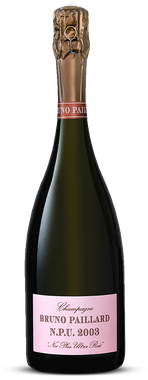
The 2003 N.P.U. Nec Plus Ultra Rosé is the rarest of rare, with only 800 bottles ever produced, we have the grand fortune of having three of these stories bottles in Africa.
If you think about it, the time and effort that has been put into each and every step, the sheer time these wines have been afforded to lie, is representative not of a revenue driven business, but the business of passion. The absolute extravagance of time.