A Pacific swell of new, progressive vintner talent and new vineyards giving rise to world-class wines for the right reasons. Wines showing more purity of fruit, a sense of place, and a restraint we – for the most part – the international audience were perhaps not aware of. I certainly had no clue when Alex [Dale] first announced we'd be receiving a California shipment. Throw in some great characters behind the labels, and you have a wine region wholly individual in what it is putting forward.
In this feature, we’ll head up the coast from Los Angeles to San Francisco, calling in at the famous regions and names making up the heartlands of Californian wine. It’s a vast region, accounting for 90% of American wine production and spanning some 750km between Santa Barbara and Mendocino County.
Lining the coast of California are the cold waters of the Pacific Ocean. As the cold currents meet the shore in summer, they create blankets of cool fog, allowing for a temperate climate. Governing vineyard suitability and plantings are the ability of these fog pockets to reach inland.
Santa Barbara with Sandhi
In California (in fact, North and South America) most coastal mountain ranges, and thus most valleys, run north to south. However, here in Santa Barbara, we have transverse valleys, channelling the cool ocean weather inland. Like our own Hemel en Aarde valley, this is Chardonnay and Pinot Noir territory.
The region shot to fame with the movie Sideways in 2004, which made a star of Pinot Noir. Here, three valleys form the AVAs (American Viticultural Area); Santa Ynez, Santa Rita, and Santa Maria.
A group of ambitious and pinot-loving upstarts found a home here around the time of Sideways, and their wines gained a cult following the world over.
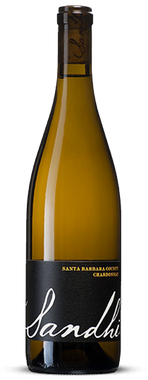
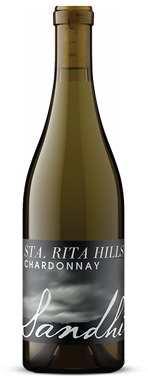
Of this, there is no finer example than Sandhi. The label was established in 2010 by charismatic duo Raj Parr (sommelier and wine commentator) and Sashi Moorman (smart winemaker). Both, well worth a follow.
The project sees them working with Chardonnay and Pinot parcels dotted around the region. There is a stylistic thread running through the Sandhi wines. Characterful, assured, and never forced.
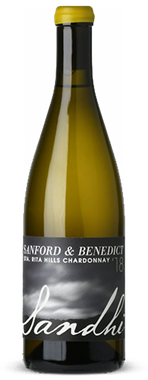
Keep an eye out for a new intake of the Sandhi Pinot Noir bottlings later in 2022. For now, a handful of their Chardonnay bottlings remain, each more delineated than the next; the ‘open-knit’, textural Santa Barbara County 2016 (Vinous 89-90), the ‘crunchy’, layered and ‘bright’ Sta Rita Hills 2018 (WA 92), and the fine, chiseled Sanford & Benedict 2018 (VN 95) vineyard bottling. Planted in 1971, this is the oldest Chardonnay site in the region and serves up inviting Chardonnay aromatics, a smack of minerality, and a long saline finish. “The most forthcoming of the Sandhi Chardonnay’s. I loved it”. (AG, Vinous).
For one of the world’s great Pinot Noir experiences – if you can find it – check out the coveted expressions of Domaine de la Côte, from 17ha’s of vineyards co-owned by Moorman and Parr.
“The 2018 Bloom's Field is an epic Pinot that redefines what the Sta. Rita Hills is all about.”
98 points, AG, Vinous
Paso Robles with Broc Cellars
Paso Robles epitomizes the ‘anything goes’ free spirit character of the New World. Hedonistic wines, blending all manner of varietals, often combining Rhone & Bordeaux and generally throwing out the old-world rule book. It’s the Wild West of Californian wine.
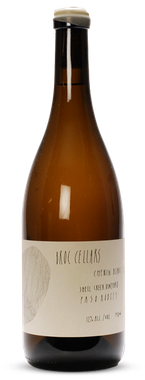
Whilst Chris Broc is not based in Paso Robles, he and his partner Bridget do work with fruit here. It is then transported north (a four-hour drive) to Berkeley where they vinify the fruit at their urban winery under the label Broc Cellars. Curiously, they work with one of the rarest of the noble white varietals to be found in California; Chenin Blanc.
Once upon a time, Chenin Blanc held a reputation in California for providing reliable, vigorous fruit for use in inexpensive wines. However, it lost favour and current plantings occupy less than 2000ha in the USA. Sales of Chenin Blanc in the USA retail are tiny, untraced and below Riesling at 1.6% of white wine volume.
However, all is not lost for Chenin Blanc in the USA – it is held in high esteem by notable wine critics and is seeing a mini-renaissance among the trendy independent winemakers.
The Paso Robles Shell Creek Vineyard 2017 Chenin Blanc comes from a vineyard planted in 1972. The topsoil is sandy, with calcareous fossilized seashells underneath. It is farmed without pesticides and chemicals and is seeking organic certification.
Winemaking is distinctly hands-off, and the resulting wine is natural, cloudy, and with plenty of goodness suspended in the wine. It’s a fantastic example of the type, playing on the citrus (lemon & lime) virtues of Chenin Blanc. A pithy, textural wine that is weightless on palate entry before gaining presence.
I recommend pooling a bottle with mates, benchmarking alongside a few local Chenin’s over a yellowtail braai, and debating well into the evening. Let us know what you think.
“This wine is brisk and earth-driven. Its aromas and flavors of dried earth, chalk, herbs, and tart citrus should make a beautiful pairing partner with pan-seared sea scallops.” 90pts, Wine.com
Santa Cruz with Mount Eden Vineyards & Arnot-Roberts
One writer making the case for Cape Chenin Blanc is Eric Asimov of the NY Times, and so he gets my vote when he calls Santa Cruz “the least celebrated great American wine region for Cabernet Sauvignon”. Overshadowed then, by the Cabernets of the famed expressions of the Napa Valley. Santa Cruz represents the insider's tip, honed to producing Cabernet – arguably - of greater transparency.
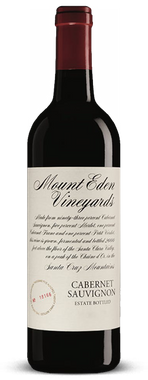
Perhaps the most vital estate in the region is Mount Eden Vineyards, sitting at 600m elevation and overlooking Silicon Valley. The winery was founded in 1945 and the cool, exposed sites planted to focus varietals: Chardonnay, Pinot Noir, and Cabernet Sauvignon. An unusual combination (wink, Restless River).
Cabernet Sauvignon in Santa Cruz has a history as far back as the 1890s, with select cuttings brought over from the famed Chateaux Margaux of Bordeaux and planted at a farm called La Questa. In the 1940s, Martin Ray would, in turn, establish the first Cabernet vineyards at Mount Eden with cuttings from this farm. These Cabernet vineyards at altitude, on thin soils and yield just 1 or 2 tonnes per hectare.
Mount Eden Vineyards Cabernet Sauvignon 2016: "Readers, take note. This is a world-class Cabernet Sauvignon that in any other region would cost 2-3 times as much. Savory and expansive, with tons of mountain character and remarkable richness from low yields in 2016, the Cabernet Sauvignon is simply off the charts. It’s another utterly breathtaking wine from Mount Eden." 98pts, AG, Vinous
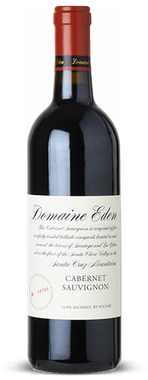
In 2007, the present-day owners of Mount Eden acquired a sister property on a neighbouring mountaintop, renaming it Domaine Eden.
Domaine Eden Cabernet Sauvignon 2016: “Lots of layers and integrity. This clearly has a great future and is clearly a Cab with a sense of (California) place.” 17/20 Jancis Robinson MW
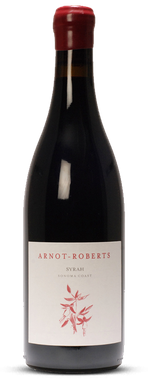
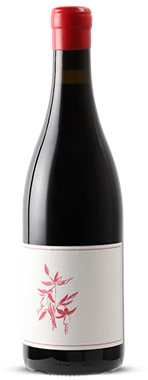
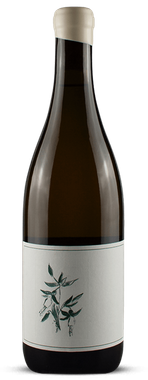
With sites of Santa Cruz nestling above the cloud line, it’s no surprise to see successful expressions of Pinot Noir from the likes of Arnot-Roberts, a label established by childhood mates Duncan Arnot and Nathan Roberts. Duncan and Nathan are not limited to Santa Cruz and have gradually built up an impressive network of vineyard parcels spanning into the likes of Sonoma, Napa (see their Watson Ranch Chardonnay 2018 bottling), and Amador. They are also not limited to Pinot Noir, offering up a myriad of expressions across Chardonnay, Gamay Noir, Trousseau, Syrah, Cabernet Franc, and Cabernet Sauvignon.
“For me, this is one of California’s most exciting wineries. The wines are restrained and elegant, without any of the over-ripeness that many Californian wines display.” Jamie Goode, Wine Anorak.
Again, there is a stylistic thread running through these wines. They show gorgeous, lifted varietal scents and florals. The palates are transparent, energetic and just the right side of edgy.
On the Santa Cruz Mountains, the focus is on Pinot Noir, with our intake including a mere two cases of the Santa Cruz Legan Pinot Noir 2018. Arnot-Roberts bottle another Pinot from these mountains, namely the Peter Martin Ray Vineyard.
Santa Cruz Legan Pinot Noir 2018: “Gorgeous mixed forest berries have a delicate ethereal quality mixed with stony minerality and chopped herbs and floral notes. Faint muscular tannins... Really beautiful.” 18/20, Alder Yarrow, JancisRobinson.com
“Gracious and perfumed, the 2018 will drink well for a number of years. I would prefer to cellar it a bit first, although that will clearly require a bit of willpower.” 94pts, AG, Vinous
Sonoma with Kutch
The rise and rise of Kutch.
“Over the last few years Kutch has emerged as one of California’s leading proponents of Pinot Noir, and this lineup cements the reputation of Jamie Kutch.” Jamie Goode, Wine Anorak on the Kutch 2018 Pinots.
Following 17 years of hard graft in wine, Jamie Kutch has purchased estate land on the Sonoma Coast. Here he is with stepdad Roger, as they begin preparations on the 12-acre site. They have 15,000 plants on order, comprising Pinot Noir and Chardonnay.
There is something particularly taking about Jamie Kutch’s journey to wine, chucking in the NASDAQ trading floor for a life as a Cali vintner. This was no idyllic retirement on a financial fortune, but a wish for a simpler and happier life at the age of 30. The events of 9/11 several years earlier would serve as a catalyst.
Jamie Kutch started winemaking in 2005, with some cash to purchase fruit and a determination to learn. He often laments that failure was simply not an option and his city trading skills paved the way for Jamie to secure grapes from top sites early on. There’s clearly a strong character here, but there is humility to boot. He is always learning, always refining.
“It's like a great chef. You see these guys in their sixties or seventies still trying to make a great dish even better. As a winemaker, I need to make each vintage count.”
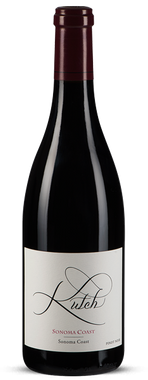
Our latest intake sees the single-vineyard 2018s taking centre stage, but there is also a regional bottling, the Sonoma County 2019 Pinot Noir. In 2019, Kutch produced 30% less of his top wines, opting to bottle the ‘lesser’ barrels Sonoma County. It’s a vivid, impeccably clean Pinot Noir, led by red fruit, a little undergrowth, and florals. It all sounds like a generic quality Pinot note, but it’s the quality of fruit and the balance that dial this wine in.
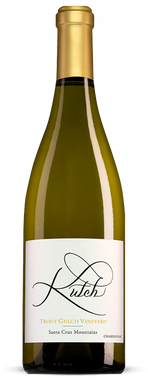
The other wine from Kutch I have been lucky enough to sample from this intake is the Santa Cruz Mountains Trout Gulch Chardonnay 2018. This is from a Chardonnay site of 41 years of age, unirrigated and organically farmed. It’s an epic cool-climate expression of Chardonnay; concentrated yet bracing, with a little struck match reduction. If you are in the market for White Burgundy at this price tier, this (and the Murdoch Hill Rocket Chardonnay 2018, Adelaide Hills while we are at it) is a must-have.
“Exotic and complex, the Trout Gulch has so much promise. It is tremendously beautiful, textured, and nuanced, even in the early going.” AG, Vinous, 92-94
The single-vineyard Pinot:
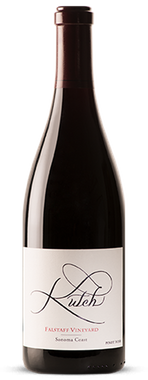
Sonoma Coast Falstaff Pinot Noir 2018: ".. beautifully perfumed, lifted and gracious. Sweet red cherry, blood orange, mint, spice, and a touch of whole cluster brightness all grace this exquisite Pinot from Jamie Kutch. The 100% stems are already very well-integrated. This is such a captivating, finessed wine." 94, AG, Vinous.com
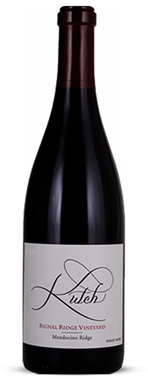
The final Pinot bottling from Kutch falls outside of Sonoma, past San Francisco to the north and into Mendocino County, but I will group it here. Of note is the Mendocino Ridge AVA denoting this bottling. It is the only AVA in California without conventional boundaries. Instead, it is made up of elevation pockets exceeding 365m above sea level.
Mendocino Ridge Signal Ridge Pinot Noir 2018: “From 1999 plantings, seven barrels made.. an altitude of 2800 ft, above the fog line. It’s the highest vineyard in Sonoma and Mendocino. Floral and enticing with sweet raspberry fruit and some sappy green notes. The palate has bright spicy framing with some sweetness on the mid-palate.” 94, JG, Wine Anorak
Napa & Lake with Mayacamas Vineyards & Slingshot Wines
“Napa Valley PR has seduced another bunch of single British wine guys”.
Oz Clarke, Oz & James’s Big Wine Adventure Season 2: California.
I have not been to Napa Valley, but I have watched Oz Clarke and James May’s brilliant wine series of 2007. Full episodes are on YouTube and are highly recommended.
Oz calls it ‘the Vegas of the Winelands for extravagant, often bonkers architecture’. He also notes that the producers here are all in it together, lavishing tourists with luxury, excess, and charm as soon they step off the bus. If this is the Napa goal, then where better to focus your wine production than with Chardonnay and Cabernet Sauvignon, varietals holding top brand equity, and that take well to lashings of new oak and luxurious styling. So-called made wines.
This is the stereotype I held of Napa Valley, but then you come across the likes of Mayacamas Vineyards.
At Mayacamas Vineyards, aging of the wines is almost exclusively in neutral oak and in larger vessels like this foudré, which has graced the cellar since the 1920s. www.mayacamas.com
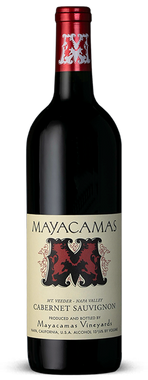
Mayacamas Vineyards has been around since 1889, taking its name from the Mayacamas Mountain range that borders Napa Valley and Sonoma County to the south. The name translates loosely to ‘howling mountain lions’, from the indigenous Wappo language. The website imagery is stunning, and this is clearly not a property of excess, but of humility and tradition. This follows through to viticulture and winemaking, where these qualities are joined by innovation. The property has been sympathetically restored under the current owners (since 2013), vineyards replanted where necessary, biodiversity encouraged in and among the vines, and a transition to organic farming. Harvests are a little earlier in recent years, in a bid to preserve freshness in the wines. On Mount Vedeer, most sites are above the cloud line once more, giving tiny yields and reds with a firm tannic backbone.
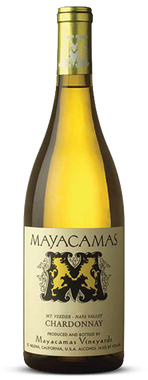
We patiently await more of the legendary Cabernet Sauvignon, but a few bottles of the Mount Vedeer Chardonnay 2018 remain. The vines here sit on volcanic soils, with the wine fermented and matured in French oak for 12 months, 10% new.
“So different from the Kutch Trout Gulch, none of that reductive character, much more peachy with just a hint of oak spice. Full and rounded in the mouth, a little bit floral but with a backbone of citrus freshness to balance the generous fruit. Full-bodied but not in the least heavy. Long and flavourful with a sour freshness to finish.” Julia Harding MW, JancisRobinson.com
Referencing Oz Clarke again, the new wave does not only refer to viticulture or vinification. It also relates to personality. Chucking out all the bravado and pomposity, and simply getting on with it and having a good time on the way. Introducing, Slingshot Wines.
“Our approach borders on irreverent... Be bold, be adventurous, choose your own path, and above all remember to have fun.” Slingshot wines.
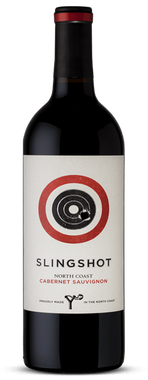
The Slingshot North Coast Cabernet Sauvignon 2017 does not carry a typical Napa Valley price tag. It’s not technically Napa Valley AVA, given North Coast also encompasses Sonoma County, Lake County, and Mendocino. That said, the vineyard source for Slingshot is based in Lake County, and here the vineyards have a reputation for presenting Napa-like structure and concentration, at far less cost*. It’s more remote, rural, and more rugged than its’ famous neighbour. It’s becoming hot property.
The Slingshot undergoes a full whole-berry fermentation in stainless steel tank, before maturation for 12 months in French oak, 45% of which is new. It’s incredibly dense, a melee of cool blackberry and blue fruited jam, sweet pipe tobacco, and dark chocolate. The tannins feel a little chewy, coated (and muted) by the flesh of the wine.
If you enjoy wine descriptors noting ‘jam’ or ‘coulis’ qualities to the fruit, then this may well be your new favourite wine. Perhaps this is the result of the whole-berry fermentation, or the long, temperate ripening season, or both. Either way, it does have an American charm to it. I enjoy that they’ve taken the time to hole out a shot on the front label target.
*In 2018, the average price of Lake County grapes was $ 2,061 per ton, compared with $ 7,295 per ton via Napa Valley growers. In the article ‘Why Stellenbosch Cabernet Sauvignon will always be a sure thing’ on WineMag.co.za, Christian Eedes comments on the rising cost of Stellenbosch Cabernet grapes: “moving from an average of R4 952.63 per ton in 2014 to R8 638,79 in 2019 – nearly 40% of it last year selling for over R10 000 per ton.” A crude calculation today exchanging USD$ to ZAR would place Napa Cabernet at R112,000 per ton!