Legend has it that in 1992, a group of South African winemakers said “ciao” to Apartheid sanctions and smuggled Italian vine cuttings into the country. While the days of subterfuge are long over, Italian grapes continue to thrive in a few niche South African vineyards and wines. You may very well have tasted a South African blend that included Italian varietals without even realising it.
Though we speak different languages, there’s plenty connecting our wines. Keep reading to discover the best Italian wines based on the South African bottles you already know and love.
Matching Familiar South African Wine Styles with Italian Counterparts
With any translation, some words never quite match up. There is no other word for lasagne, no way to translate tiramisu, and no shortcut to explaining why the food of Italy tastes the way it does in the place it comes from.
The same is true of their wines. There is rarely an Italian twin for the wine produced here, but that’s part of what makes exploring these different styles so interesting. The contrasts as well as the similarities provide plenty of new territory to taste.
Here are five beloved South African wines and the Italian wines that best match their flavour profiles and character:
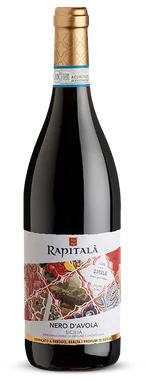
Pinotage and Nero d’Avola
Pinotage is one of the very few grapes to have originated in South Africa, and it makes up roughly 7% of the vines grown here. In contrast, Italy has around 300 indigenous varieties.
The best match Italy can offer for Pinotage’s notes of dark fruit, spice and earthiness is Nero d’Avola. The joy of sipping a glass of Pinotage is how much character the red wine can offer. Nero d’Avola is similarly complex. The grape is a signature of Sicily and thanks to the Mediterranean climate, has the depth and fruitiness Pinotage lovers will appreciate, with just enough acidity to give it some edge.
It’s also a grape with a history that may even extend all the way to the Greeks first landing in Sicily. As a fan of the Pinotage grape, which has been cultivated only since the 1920s, it’s fascinating to experience a wine with centuries of viticulture behind it.
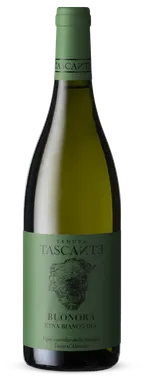
Cape Chardonnay and Etna Bianco
South African Chardonnay has become increasingly recognised over the last few years. The cool breeze and limestone soils of the Breede Valley have helped produce notably refined Chardonnay, while oak-barreling has added a creaminess to many of the wines. Italian wine depends less on oak, and of course, Chardonnay hails from France, so there’s no exact Italian substitute. Instead, the Italians offer a contrasting wine in the form of Etna Bianco.
Like Chardonnay, Etna Bianco thrives in specific circumstances. It hails primarily from the volcanic soils of Mount Etna. This lends the wine a strong mineral quality and acidity, as well as notes of citrus fruit. If you gravitate to Chardonnay for its freshness and sense of place, then Etna Bianco will be an easy match.
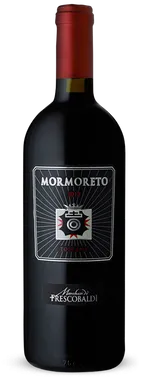
Cape Bordeaux Blends and Super Tuscans
Most of Italy’s wines have strict, traditional guidelines, but there’s a little more freedom when it comes to the Super Tuscan Wines. Like the Bordeaux blends coming out of Stellenbosch, the magic of these wines is in the mix.
The Cape Bordeaux blend varies depending on what percentage of Merlot, Cabernet Sauvignon, Malbec and other grapes are used, but generally the wines balance structure and freshness for something that is infinitely drinkable, especially with a good meal. The Super Tuscans offer something very similar. They often feature the Sangiovese grape as a base, combined with French-originated reds such as Cabernet Sauvignon and Merlot. Others skip Sangiovese entirely, Sassicaia is almost all Cabernet. Think rich tannins, fruitiness and a lingering earthiness to ground it all.
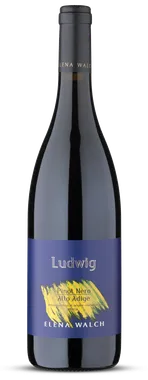
Cape Pinot Noir and Alto Adige Pinot Nero
The Pinot Noirs of Elgin and Hemel-en-Aarde are often praised for their elegance and subtle spice. They’re great for anyone who wants a glass of red that isn’t too heavy. Italy’s Alto Adige Pinot Nero features the same grape, just cultivated in a much cooler climate. The result is a version of Pinot Noir that is even lighter, thanks to a refreshing acidity.
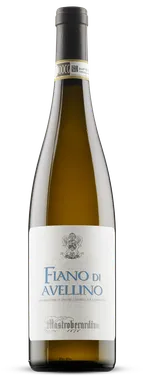
Sauvignon Blanc and Fiano
Fiano isn’t a wine many know by name, but it should be. This aromatic white wine is produced in Italy’s warm, southern region: Campania. It has a creamy mouthfeel and a bright acidity to it, balanced by the nutty, almost honeyed flavours. Notes of citrus and stone fruit can often be detected, adding to the summery quality of the wine.
It’s the perfect option for anyone who usually orders a glass of South African Sauvignon Blanc. You’ll find the same mix of freshness, citrus and tropical fruit, but with less green and more texture. Consider it a chance to enjoy all that you love about Sauvignon Blanc, with the addition of a Southern Italian flair.
From Sicily to Piedmont: The Wine Regions of Italy
South African winemaking is centred in the Cape. In Italy, the country is dotted with multiple wine regions, each with their own climates and specialty grapes. Many of the vineyards there go back centuries and provide as much insight into winemaking as they do Italy’s history.
Travel north to Piedmont and you’ll find viticulture built by major political powers and estates that still feel aristocratic in nature. In the centre of Italy, there’s Tuscany, a region as famed for its beauty as it is for its wine. Chianti is one of its most iconic exports but there are plenty of other appellations to be found on those rolling hills.
All the way South is Mount Etna and the vineyards that cling on despite the threat of volcanic eruption. That region in particular speaks to the persistence of Italian winemaking. Despite centuries of war, volcanic destruction and poor seasons, the vines continue.
South African wines don’t quite have this breadth of history just yet, but it’s why a glass of Italian vino is such a treat.
Consider this just a taste of Italy. Our friends at Eating Europe have plenty more to share.
Keep exploring with Eating Europe