Speaking to the Mullineuxs, during yet another alcohol ban, I realise the importance of patience. There is a patience inherent to the making of fine wine that completely suits the state-enforced enjoyment of fine wine in South Africa right now. It is a timeless kind of thing. The timelessness inherent to the Mullineuxs’ way of winemaking is manifold. From searching for old vine vineyards, to the experimentation inherent to dealing with the effects of climate change on winemaking (especially in the Swartland), to establishing vineyards with the potential to grow old, to educating consumers about the value of old vine wine, to making wine in time consuming ways. Their Olerasay Segundo is a sweet wine made from the fractional blending of vintage straw wines stretching from 2008 to 2019, to the CWG Leeu Passant Radicales Libres, a Chardonnay benefitting from 5 years in barrel - there’s no hurry here. Only a complete commitment to … quality, a sense of place, a mindfulness, and at the end of the day - FINE WINE.
The Angel’s Share
Chris Mullineux mentions, off-hand, the angel’s share. It is an old adage in reference to the amount of wine that dissipates during the making of straw wine, and the amount of wine that actually makes it to bottle. The wine’s so GOOD, even the angels want their share - though that’s just me taking artistic license - you’ll forgive me. Andrea says that we forget, not that long ago (10 years, you KNOW how fast that goes), it was a difficult thing to sell Swartland Fine Wine, even to local restaurants, nevermind international markets. It’s kind of unimaginable these days, given the proliferation and accolades of Swartland wine in recent years that people would have shied away from serving it in fine dining establishments. It IS then remarkable that within a 10 year period, that two young winemakers, one from America and one from the Cape, were able to so completely alter the trajectory of Swartland wine.
Teamwork
How? Teamwork. Science. And freedom.
Teamwork? The Mullineuxs were part of a team of established Swartland winemakers, including: Kallie Louw (Porseleinberg), Adi Badenhorst (A.A. Badenhorst Family Wines) and Eben Sadie (Sadie Family Wines). Together, these formidable winemakers established The Swartland Revolution. By all accounts it was an incredibly successful event, focussed on the education of consumers on the value and quality of Swartland wine, establishing a community of likeminded individuals and now, 10 years on, a mythical milestone in marking Swartland wines as South African FINE WINE worldwide. The Revolution occurred over a period of 6 years, because, as Eben said, a Revolution doesn’t last a lifetime, and by the end of it, their goals had been reached. Swartland wine today enjoys a special place on the South African wine rack, with a new respect (not re-newed), a new community of Swartland wine lovers, and an established group of Swartland winemakers willing to take the TIME to discover the virtues of Swartland wine. Today, Andrea is the chair of the Cape Winemakers Guild and part of a broader community, having met their original goal as pertaining to Swartland wine. Mentored by people such as Kevin Arnold of Waterford and Norma Ratcliffe of Warwick, Andrea’s fearless winemaking techniques and pioneering role in South African winemaking is evident in the wine. The mentoring and grapevine inherent to the industry having played a defining role in their success.
Science
Science. Making wine in an extreme winemaking region such as the Swartland, the harvest of 2016 proving particularly challenging and by extension life-changing in terms of the encroaching drought, the Swartland and Swartland winemakers were forced to be SMART about their winegrowing and making in recent years. The Mullineuxs are comfortable with terms such as ‘nerdy’ and their wines reflect the time and effort spent planning their specific approach to the harrowing conditions of the last 4 years. Their approach being a holistic one led by viticulturist Rosa Kruger. There are a number of sustainable wine growing tactics in the vineyard, which I think I can summarise in my own layman’s terms as the following: Sustainable farming. There is a lot of discussion about the meaning of organic and biodynamic farming, though as Chris says, if you are not certified, it would be illegal to try and parade as a certified grower. The Mullineuxs however employ a number of techniques within the vineyard focussed on sustaining the natural biome and leaving themselves the freedom to intervene if necessary. The big advantage of these tactics ultimately contribute to the goal of growing OLD vines, the techniques all geared, not toward instant gratification, but a slow evolution of the vine, irrespective of the low yields and investment inherent to the process. Given that they also farm and buy in from regions outside the Swartland for their Leeu Passant Range, including Franschhoek, Wellington and Stellenbosch, they are constantly tailoring their tactics by region and the age of the vineyard. The oldest vineyard they work with being around 120 years of age, in Wellington, planted to old vine Cinsault. Andrea says it is their responsibility toward old vines to either treat, protect or rehabilitate, in order to retain the ultimate flavour of the Cape - yet another time consuming thing.
Experimental Farming
The next tactic would be ‘Experimental Farming’. Because the Swartland is such an extreme winemaking area, the Mullineuxs have started experimenting with varietals internationally well-suited to the dry, hot conditions of the area. Including native Greek and Portuguese varietals, these also come with a ‘time-tag’, once again requiring the PATIENCE so inherent to their winemaking. Andrea says that bringing in a new varietal can take anywhere from seven years in quarantine, three years to grow your first crop and two years to understand it - all in all, 12 years just to find out if it would WORK. People willing to TRY, should most definitely be rewarded I feel?
Freedom
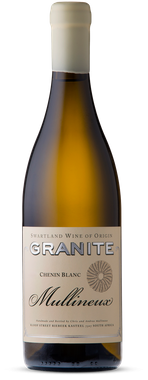
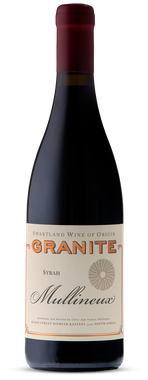
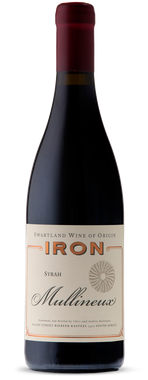
I don’t mention freedom ironically given the situation we currently find ourselves in. In comparison to a number of winegrowing regions worldwide, South Africa still offers the most freedom in discovering what works best here and doing it to the best of our ability. The Mullineuxs have displayed this by making incredibly innovative wines. Starting with their single soil wines, the Swartland offering large areas of ANCIENT, single soils including Schist, Granite and Iron, which they have been bottling since 2010 to reflect the distinct expression of each soil. Their recently awarded, 100 point (rated by Neal Martin now of Vinous), Olerasay (a kind of anagram of the winemaking technique they employed), a fractional blend of vintage straw wine made from Swartland Chenin and incorporating 11 vintages wines. As well as Andrea’s Cape Winemakers Guild Radicales Libres, previously made with Chenin blanc and now Chardonnay for the next Guild Auction, the wine spending up to 5 years in barrel. Andrea says they’re not necessarily looking to do something NEW, but to do something they do well, BETTER. Having released their first vintage in 2009 with only 3 wines, I’d say they have excelled at the things they do WELL.
Struggles turning into Milestones
While discussing their milestones and struggles, it became apparent that each milestone, had a related struggle. 10 years ago they struggled to sell Swartland wine as fine wine, so they started the Swartland revolution. In 2016 the drought hit, and they started the process of planting experimental varietals and farming even MORE sustainably. Every struggle acting as the beginning of a milestone, starting a winery in the economic crisis of 2008, of unpopular (at that time) Swartland wines and 12 years on, being named Platter’s winery of the year 4 times . There’s nothing in the DNA of this brand that suggests that two alcohol bans and a pandemic will result in anything less than yet another milestone.