Perhaps the most significant development for the Cape fine wine category of the last generation, has been the work of the Old Vine Project. But what of our international peers? Here’s a look at a few remarkable old vine wines from South Australia.
I had initially set out to write a feature on old vine wines from Europe. Wines like Domaine des Roches Neuves by Thierry Germain, and their ‘Les Memoires’ Cabernet Franc. It’s one of my favourite wines, from rare pre-Phylloxera vines of some 110+ years, biodynamically farmed and planted to high density. But upon reading up on the ‘Barossa Old Vine Charter’ ahead of a trip to Australia last month, things took a bit of a turn…
The old vineyards of Europe were the catalyst for Rosa Kruger to begin documenting old vine parcels of the Cape back in 2002. The OG ‘Old Vine Series’ of the Sadie Family Wines launched in 2006, with formal recognition of the OVP achieved in 2016. In the same year André Morgenthal joined as Project Manager instilling the line that represents the OVP mantra today; ‘plant to grow old’.
The Old Vine Project has been instrumental in protecting and rehabilitating these heritage vineyards, providing better economic support for those growers that farm and sell their yield. Ultimately not being in the position to recoup margin by bottling their own.
The project has been influential beyond our borders. ‘The Old Vine Conference’, with a HQ in the UK, kicked off in 2021 to create a ‘global movement to nurture and value great old vines, and their wines’. They host regular conferences and list organisations like the OVP across the world working to protect and preserve old vine sites here.
There’s something quite mythical about the struggle of an old vine. Scarcity as a result of the limitation of vineyard, and the ability to yield wine of transparent varietal character, individuality and a sense of place. The hallmarks for great wine. It’s hard to pin down why old vine wines can be so good, but there is a clarity and quality to the fruit and tannin. A seamlessness to the wine.
AUSTRALIA
South Australia is home to the greatest array of old vineyards in the world. Whilst the late 19th century saw Phylloxera begin its decimation of the worlds wine regions, the general isolation of South Australia meant that, to date, the vineyards remain free of this root attacking insect pest. It means that the vineyards here are not only old but planted to their own roots.
In 2007, Yalumba set about establishing the Barossa Old Vine Charter, which decreed that the use of ‘Old Vine’ in their labels would signify authenticated vines of 35+ years (as with the OVP). In 2009, the OVC evolved into an industry recognised charter for the Barossa.
With the Old Vine Charter are further classifications.
- Old Vine: equal or greater than 35 years of age
- A Survivor Vine: equal or greater than 70 years of age
- A Centenarian Vine: equal or greater than 100 years of age
- An Ancestor Vine: equal or greater than 125 years of age.. AKA a ‘Very Bloody Exceptionally Old Vine”.
Late October, I set off on a multi-city trip to promote the wines of Radford Dale and the Cape region, with three days tagged on to visit our producers in the Barossa and Adelaide Hills.
Here are a few old vine recommendations.
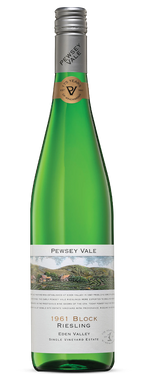
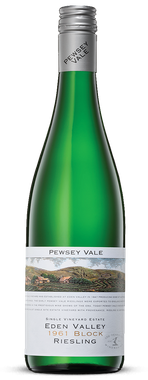
Pewsey Vale Eden Valley Vineyard 1961 Block Riesling 2021
Pewsey Vale Eden Valley Vineyard 1961 Block Riesling 2019
Back in 1847, Joseph Gilbert planted the first vineyards & first plantings of Riesling in the Eden Valley. At 500m above sea level, the region sits 250m higher than the Barossa floor, with the relative cool-climate an attractive proposition for Wyndham Hill-Smith. One of the first families of Australian wine, the Hill-Smith family of six generations on still preside over Pewsey Vale and a host of top producing names; Yalumba and Heggies in South Australia, Dalrymple and Jansz in Tasmania, Burn Cottage and Nautilus in New Zealand to name a few.
Wyndham Hill-Smith set about restoring the Pewsey Vale vineyards in the 1960s, propagating material from the original 1847 vines.
Riesling is the singular focus here, an oasis of some 58ha of vineyard. One of the great New World Riesling producers, and as the name suggests, this bottling comes in from a special block planted in 1961. Enjoyable now and with bags of cellar potential.
2021: 94/100 Vinous “There's lovely purity and aromatic energy to this old vine 2021 Riesling 1961 Block, which displays pear, green apple and white flower aromas, a wild ferment just adding a slight savory touch. Compact and focused, it boasts layers of minerality with subtle jasmine tea, lavender and citrus pith. A gentle grip gives heart and soul before fostering a long, more savory finish. Delightful and will get better.” Drink 2025-2038.
2019: 93/100 Vinous “Bright straw. Vibrant, mineral- and floral-driven citrus fruit aromas show fine definition and pick up a deeper pear quality with air. Shows firm tension and energetic lift on the palate, offering nervy lemon zest, green apple and pear skin flavors that deepen and stretch out slowly through the back half. Smoothly blends depth and vivacity and finishes very long and minerally, with the citrus fruit note repeating.” Drink 2025-2034.
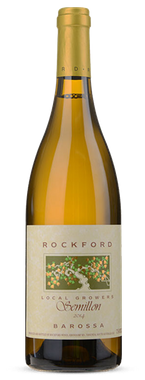
Rockford Barossa Valley Local Growers Semillon 2021
Semillon is one of the original Barossa varieties. Here Rockford source fruit from local growers who have farmed the variety for generations. Expressions used to court richness and body, but more recently the Local Growers Semillon is a gorgeous expression of the variety, with multiple pickings to achieve freshness and texture. At a restrained 11.5% vol, it combines all the concentration of old, low yielding Semillon vines with an underlying freshness. Aromas of lemon, lanolin, honey and pithy apple, while the palate is waxy, racy and textural.
The Rockford courtyard winery resembles a museum, eschewing modernisation & employing the use of vintage, traditional presses & sorting machinery. It makes for a great visit, particularly in harvest time when guests can get close to the action and watch the work of the team within the courtyard.
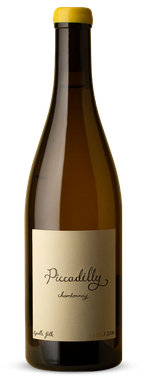
Gentle Folk Adelaide Hills Piccadilly Chardonnay 2021
I’ve sort of given up on locating wines from the 1983 vintage. It’s my birth year, but across the world’s wine regions it was a bit of a stinker as far as people tell me. On encountering this wine, I’ve reconciled that wines from vineyards planted in 1983 may be the answer.
It is among my favourite Chardonnay’s and a great pour to show the sceptics that modern Australian Chardonnay can be great for all the right reasons. The Adelaide Hills is bristling with young vigneron talent, chief among which, Gareth & Rainbo Belton at Gentle Folk.
1983 is also Gareth Belton’s birth year and he and wife Rainbo have recently taken on a new winery facility in the heart of the Adelaide Hills. It’s a remarkable landscape of steep sloped, green hills of forests, pastures, vineyards and orchards. At this time of year, the days can be warm, but the night brings about a dramatic fall in temperature. At the time of visiting, clear signs of frost damage have hit pockets of vineyard among the hills.
Gareth was born in Cape Town and spent his early years in Johannesburg before the family moved out to Australia. He and Rainbo studied as marine biologists, but a love of food and wine motivated them to start the Gentle Folk label in 2012.
At 520m above sea level on the Piccadilly range of the Adelaide Hills, this 40-year-old site yields a world class Chardonnay under the light hands of Gentle Folk. Cool climate Chardonnay, with bags of palate interplay between long hung, velocious fruit and a thrilling acid line. Tense and well judged, it shows a core of lemon, steely minerality and stunning palate length.
At just 2,000 btls, give or take, produced annually, we’re thrilled to receive a small allocation to South African shores.
Yalumba Eden Valley The Virgilius Viognier 2020
Likely Australia’s benchmark Viognier, Yalumba established the first plantings of the variety in Australia back in 1980 off the Yalumba nursery. It was a time when Viognier was all but extinct. In Condrieu of the Northern Rhone, the varietal had been reduced to a mere 5 -10ha, depending on who you ask and Jancis Robinson MW notes in her book of 1985, ‘Vines, Grapes & Wines’ that she was able to identify records of just 32ha planted worldwide!
Admittedly, half of the wine comes in from the original site planted in 1980, with the remainder from a younger site planted in 2004. But it stands as an important expression of the old vineyard, the ascent of Viognier since, and lends a reminder that this varietal, in the right location, can produce excellent white wines.
93/100 Vinous “This beautifully crafted 2020 Viognier The Virgilius from Eden Valley shows exceptional fruit and oak integration. There are moreish and enticing aromas: lychee, blossoms and tinges of apricot with reserved, fine oak in tow. The creamy texture with gentle acid and superb balance provides a silky and contained package delivered over a long, savory finish. A standout and beautifully composed vintage.” Drink 2023-2029.
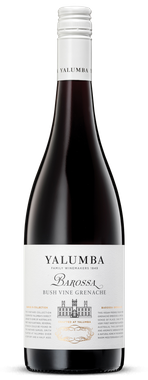
Yalumba Barossa Valley Samuel’s Collection Grenache 2021
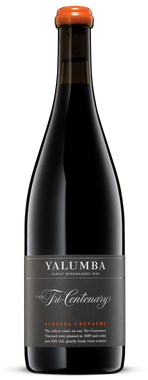
Yalumba Barossa Valley Tri-Centenary Grenache 2017
One of the regular talking points from the recent trip centred around the rise of Grenache. As the world of wine increasingly rewards reds of elegance and authenticity once again, so too do the innovative producers of Grenache in the Barossa Valley and Mclaren Vale. It serves up a vital stylistic counterpoint to the powerful Shiraz led wines the region is well known for.
Grenache is having its time in the sun and South Australia has an arsenal of historic vineyards at their disposal to produce epic wine.
Once again, Yalumba are among the driving force behind the evolution of Grenache, the Barossa Valley Samuel’s Collection consistently among our best New World buys at R448, from gnarly, old vineyard parcels planted between 1920 & 1976.
Yalumba have steered a course towards finesse in their Grenache wines, employing a portion of whole-bunch fermentation and extended time on the skins. They’re looking for tannin integration, more of a savoury refinement and balance.
It’s medium bodied, with inviting scents of red and black cherry, florals and a little herb and sweet spice. The palate meanwhile is sleek and energetic.
The flagship Grenache, the Barossa Valley Tri-Centenary comes off a single, ancestor block planted in 1889, with a total of 820 vines. According to vintage, they again employ extended maceration on the skins. In the case of the 2017, some 116 days and for the 2021 tasted during the trip, a whopping 249 days. The 2017 is matured for a short 4-month period in older French oak barrels.
If you have a pre-conception of dark, powerful Barossa reds, then this will feel somewhat anti-Australian. It’s a vital and exhilarating expression of Grenache; highly aromatic with rose water, crushed red berries, orange pith, herbs, white rocks and a light peppery character. The palate is detailed, delicate and savoury. Really fine. I like Julia Harding MW’s ‘warm climate Pinot’ analogy.
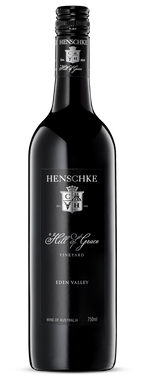
Henschke Eden Valley Hill of Grace Shiraz 2017
Australia’s most famous single vineyard wine, the Hill of Grace is produced from a single vineyard of 150+ year old Shiraz, with the oldest vineyard block within appropriately named as the ‘Grandfathers’. The vineyard is understandably well fenced, at the risk of Phylloxera coming into the site. Only Henschke employees can walk here.
Henschke was my first visit in the Barossa, and I was taken aback by the landscape during the drive out from Adelaide. It’s one of undulating slopes and grazing meadows, with ancient, individually contorted gum trees striding high as far as the eye can see. Exotic (to me) wildlife at every turn. It’s not only stunning, but with the absence of other crop farming nearby, chemical spray or run off do not impact on these tucked away vineyards.
At R 16,720 and just 3 btls in our allocation to South Africa, I cannot pretend to have sampled the 2017, but I was fortunate enough to sample the follow up 2018 at the cellar. It’s mighty impressive. Subdued and brimming with intent for the moment. I imagine it’s like sitting in a Bugatti Veyron, with the W16 engine rumbling away in neutral. It’s a quiet, refined cabin but you just know you are sitting on something that can go all out.
This year Henschke celebrated 60 years of Hill of Grace, hosting a tasting to important wine media of vintages all the way back to 1958. There’s a free to read article at JancisRobinson.com, including notes and key stylistic evolutions available here: https://www.jancisrobinson.com/articles/henschkes-hill-grace-60
Despite all the prestige associated with the wine, the Henschke red wine cellar is modest. Original concrete tanks line the red wine cellar and the team make use of simple wooden planks during fermentation to keep the cap submerged, a technique famously employed at Jamet in the Cote-Rotie and locally at Porseleinberg in the Swartland.
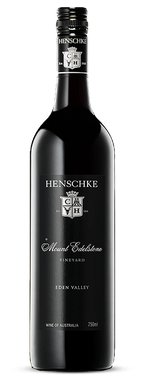
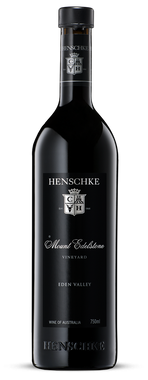
Henschke Eden Valley Mount Edelstone Shiraz 2017
Henschke Eden Valley Mount Edelstone Shiraz 2016
Henschke Eden Valley Mount Edelstone Shiraz 2015
The Eden Valley Mount Edelstone Shiraz vineyard was planted in 1912 on its own roots, with Henschke taking ownership and releasing their maiden bottling of the wine in 1952. It’s likely the longest produced wine from old vines on the planet.
There’s a surprising drinkability and refinement to the 2018 sampled at the cellar. Dark, broody and lifted aromatics of tilled earth, a little incense, graphite, bay leaf and cool, dry black fruit. I had thought this would resemble more of a ‘made wine’, but as with all the Henschke reds, there’s a translucency to it and the sense you are drinking something from an old source. Remarkably pure Shiraz and a fitting tribute to the relative cool of Eden Valley over the Barossa floor.
Cheers to the old vine!