There are no signposts. Like the beginning of all good adventures, you’re just meant to know, I guess. I’ve already broken through the thick cap of mist clinging to Sir Lowry’s Pass, slowing down for a large troop of baboons unintimidated by the four lanes of traffic they’re now directing. To me, the Overberg has always felt like entering the other side of the wardrobe. But when I eventually arrive, navigating my blue matchbox car along the dirt roads while marvelling at blue cranes overhead, it’s not Mr Tumnus I find, but rather, Thamnus.
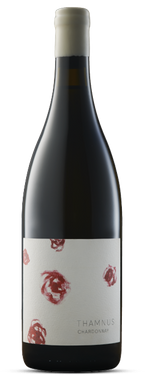
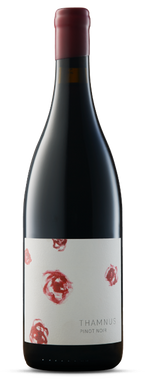
Tucked away against the mountains, dotted with sheep and old stone farmhouses, you might spot a very rare, just shy of magical, fynbos rose, which has given Thamnus its name, as well as its label. Only found in the Kogelberg and Klein River Mountains, the Orothamnus Zeyheri fluctuates from a few thousand plants down to mere hundreds. A fussy little flower that smells of freshly ironed laundry, it’s been on the endangered list since 2006. Yet, it occurs naturally on the property. “I know everyone says their terroir is special,” confides Ross Hobbs, director of Thamnus. “But ours really is. If it can nurture this rose, think of what it does to the grapes.”
Located on the border of the Overberg, Hemel-en-Aarde and Tesselaarsdal, Thamnus gets the best of all three. The only vineyards in the Hemel-en-Aarde area that are completely north-facing on 280m-high slopes, their grapes receive an average of four hours more sun a day, lifting sugars while maintaining a cool-climate acidity. Thamnus’s prize-winning sheep (they’ve actually won second-best wool in the world) are rotated throughout the vineyards, naturally fertilising the vines. It’s all about natural balance, really.
Winemaker PJ Geyer recognised the potential of this place long before he started working here. Having made wine throughout the world, most notably working with the renowned Moueix family in France (of Château Pétrus fame), it was back in South Africa when he tasted some grapes that had just come into his then winery: “I want to make wines with these!” he declared. The rest is history.
“Never think and do,” PJ says. “Taste and feel.” His philosophy is centred around understanding nature, rather than just reacting to it. “If you’ve got information here, you can impress people,” he tells me, tapping his head. “But if the information doesn’t fall from here to here,” he touches his heart, “you've got nothing.” PJ’s approach to winemaking is no different. As soon as the grapes arrive in his cellar, you’ll find him with his head inside a tank: “The smell will tell you what to do. Wine is about sensation. It’s about feeling.”
Having only launched their two small-batch wines last year, Thamnus has had a roaring start, quickly scooping up awards and placements on some of the country’s top fine dining menus. Tim Atkin described the Chardonnay as “one of those wines that stops you in your tracks” and promptly broke his own rule of never scoring a debut wine over 90 points, giving it 95. It’s chiselled and pure, with a seam of acidity as clear as the ping of a tuning fork, with a lemon biscuit nose and naartjie on the palate. It’s no wonder Michael Fridjhon named this his favourite Chardonnay of the year. The Pinot Noir, in contrast, needs to be the kind of wine you can pair with a lamb chop, PJ tells me. Perfumed, savoury and dense, it exudes fynbos — almost as though you could taste the landscape of Thamnus in the glass. “It’s like a male ballet dancer,” says PJ. “Strong but elegant.”
Before I leave, I ask PJ what makes a great wine. “You know when you know when you know,” he shrugs. “It’s like falling in love.”