Though back then, it was in the form of a tent with various dividing curtains, at its centre containing the Ark of the Covenant. While we do not wish to blaspheme NOR inflict biblical references on unwilling ears, there IS a Tabernacle of wine at the heart of Stellenbosch, and we’ve been granted access. They say places where something BIG has happened always carries an echo about them, like reverberations of significant acts, the deliberations of great men and women. I don’t know what it is, but the air seems heavier here. The Tabernacle was established by Stellenbosch Farmer’s Wineries Limited in 1979. For those who don’t know, the SFW eventually became what today is known as Distell, a global, South Africa-based alcoholic beverages company with a diverse portfolio of brands. In terms of wine however think Zonnebloem, Lanzerac, Chateau Libertas, Nederburg, and GS Cabernet Sauvignon - the historic brands of South Africa. The Tabernacle is located on the original Adam Tas farm in Stellenbosch, clandestinely built over four years. Underneath the laboratory by the five directors, Ronnie Melck, Duimpie Bayly, George Spies, Gunter Brozel, and Willie du Toit. Done in secret because they knew there wasn’t REALLY any money for it, but there needed to be a record. “It is necessary to have a central record of our products, a reference library, particularly from an experimental point of view to see what happens to them over the decades” - Duimpie Bayly, Quality Assurance Director at the time. Thus really an EXTENSION of the lab.
The Ooms
Kleinjan and I arrive at Distell early morning on a blustery Friday, they had predicted 100km winds, and we were all looking forward to battening down the hatches and enjoying a quiet weekend at home at the end of a hectic year. The descent into the Tabernacle is a welcome refuge, away from the unpredictable weather and into a parallel universe, another time. I could tell something BIG happened here... There are cork panels on the walls, and a HUGE, heavy, gothic-seeming door, which accepts the equally HUGE key, not just for show. Inside there is a magnificent Bavarian table, chairs, and sideboard, imposing, with the blending ledgers stacked up against the walls, a painting of old-man Winshaw, the carved barrels, like a kind of vinous Mount Rushmore. The faces of Adam Tas, Bill Winshaw, Gunter Brozel, Ronnie Melck, and Paul Sauer etched into them. Right at the back, there’s another set of doors and an old telephone with a wheel of numbers (LOVE it) - I pick it up, expecting to speak to security or one of the Ooms to ask permission to enter. Behind those doors are more than 23 000 bottles of OLD wines, there’s the recorked GS Cab 1966 stacked up in the corner, the Grand Constance that sold at auction for an insane sum, Lanzerac from the 1950s, you can just IMAGINE… I felt like I was trespassing on hallowed ground, so very honoured to be there. On the Bavarian sideboard a guest ledger lies open, and leafing through, names jump out at me: Tim Atkin, Michael Fridjhon, Jancis Robinson, Duimpie Bayly, Neil Ellis, some having written comments and seemingly speaking to us there, from beyond the grave. In particular, Oom Duimpie Bayly, who passed away this year and has left a great chasm. I so wish I could have heard HIS story of the Tabernacle, as there are so few left who can tell the tale. And I can assure you they must have been grand. I imagine a merry band of men secretly digging a hole in their laboratory and hiding it from the powers that be, working towards a greater goal and a real passion for WINE and their country.
The Point
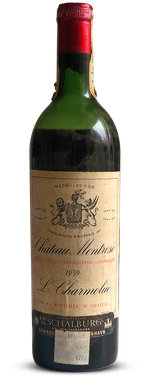
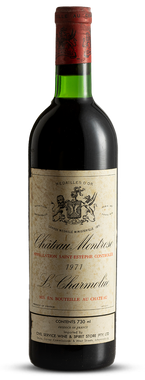
This brings me to the POINT. The POINT is that while the Tabernacle houses some of South Africa’s greatest wine treasures, the Ooms also made sure to get their hands on some of the top international wines for comparison. Already understanding then that if we didn’t know the WORLD, we wouldn’t be able to compete with it. As such, Port2Port has been offered a rare opportunity to sell a small allocation of the Tabernacle’s international wines. With Distell making space to rejuvenate the library with younger wines from flagship South African producers, and upgrading the facilities of this historic venue, we’re honoured to oblige. Given the magnitude of this opportunity, as well as the sheer importance of each individual wine, we’ve elected to present them to you per REGION. Starting with the Left Bank of Bordeaux, the home of MOST of the First Growths of Bordeaux, Cabernet-dominant blends, and generally considered one of the MOST important wine regions in the world, if not the most expensive, and well-known. As such, we’ve done our best to source background information on each wine, have photographed the bottles in their current condition, and consulted with experts to determine their worth. We invite you to partake of these iconic pieces of vinous history, both South African and International - and challenge you to find anything more deserving of the title: CULT FINDS.
- Please do note that given the age of these wines we cannot guarantee their drinkability but have made note of the ullage and the state of the labels with photographic evidence for your consideration. We defer to the Tabernacle and its track record of premium storage conditions to serve as confirmation of provenance.
For more background on the Tabernacle, we invite you to read the below extract taken from historic, internal Distell documents:
“TABERNACLE
A veritable wine library, the “tabernacle” is an exclusive underground tasting room at SFW’s premises in Stellenbosch. Housing the company’s most exclusive and valuable wines laid down under ideal conditions.
Housing some 23 000 bottles, the Vinoteque is opened by a giant key. It serves as a product history of SFW and contains many rare imported and locally produced wines, including two half-bottles of Constantia wines dating back to 1791 and 1809, which came from the Duke of Northumberland’s cellars.
“It is necessary to have a central record of our products, a reference library, particularly from an experimental point of view to see what happens to them over the decades”, explained Duimpie Bayly, quality assurance director, when the Tabernacle was opened in 1979. It is interesting to note that the Tabernacle was built with no approval or official sanction. Shortly after the formation of the production company, Stellenbosch Farmers’ Wineries Limited, in 1973, the need for such a facility was felt by the five directors, Ronnie Melck, Duimpie Bayly, George Spies, Gunter Brozel, and Willie du Toit. It was decided to proceed with the building of an underground cellar, but it would have to take place in secret since there would most certainly not have been an allocation of funds to finance the project. The help of architect Ernest Ford was enlisted and in 1975, in clandestine fashion, a hole was dug under the laboratory building. The following year, after some mindful accounting, drainage was undertaken to eliminate the water problem which had become apparent the previous winter. In year three, the cellar layout became a priority, and for the third year running, a miracle of bookkeeping produced about R20 000 for the task at hand.
At this stage, Gunter Brozel donated the last wine barrels made by his father, a trained cooper, and these were exquisitely carved by Karl Wilhelm and his son, Karl Heinz, the only wine sculptors in the Boland. These barrels feature the portraits of famous SFW wine people. Adam Tas, on whose farm today is situated the SFW Head Office; Bill Winshaw, son of the founder; Gunter Brozel, cellar master at Nederburg for many years, and Ronnie Melck, former managing director of SFW, and Paul Sauer, famous wine farmer/politician.
Year four saw the collaborators hunting for old bottles of wine, while Mrs. Annatjie Melck attended numerous auctions to source suitable furniture for such a venerable place, for example, the red Persian carpet on which President Steyn was inaugurated and a magnificent Bavarian table, chairs, and sideboard. By 1979, the venue was ready to be shown and the media were invited. MD Lothar Barth was still unaware of the conspiracy.
Making his way to the Adam Tas cellar, Barth was waylaid and taken downstairs together with the press corps.
The splendid sight and the chapel-like atmosphere made everyone’s face light up. Barth held his pose, welcomed the guests to the hallowed “Tabernacle” – the name was suggested to him at the spur of the moment – and never once did he query its existence.
Over the years, many wine friends have been introduced to Tabernacle rituals, for example, it is imperative to stand when tasting wine older than 25 years, and whoever sits at the head of the table, leads the tasting. No smoking nor partying is allowed. Guests have reciprocated with unique mementos, such as the Gansenhauser loan of a silk prayer rug depicting the famous Persian poet Omar Khanyyam, later purchased by Mike Rosholt, chief executive of Barlow Rand, and donated to SFW.
The wine collection includes Sedgwick’s White Leipzig from the 1930s, Grand Mousseux from 1929, 1935, 1936, 1937, and 1939 and Monis Steinheimer from the early 1960s. A magnum of Grand Mousseux Vin Sec, produced in the early 1960s and believed to be the oldest magnum of Grand Mousseux in existence, was donated after a countrywide search in 1981 to mark the brand’s Golden Jubilee.
An extremely rare bottle of 1945 Zonnebloem Cabernet was donated by Peter Veldsman, gourmet and food editor, who practically grew up in the Winshaw family home, La Gratitude. It is probably the only existing bottle with a label depicting the family crest of the founder of the company and was created especially for his 87th birthday in the late 1950s. Mr. Winshaw relabelled 120 bottles of Zonnebloem Cabernet 1945, which he considered the first great red wine ever produced in South Africa.
On his 94th birthday, there were enough of these special bottles left to give six of each to his wife, two sons, and Peter Veldsman. Other reds in the ‘library” include all the pinotages sold by SFW from conception. This heralded a pioneering effort by the company to market the then relatively unknown variety.”