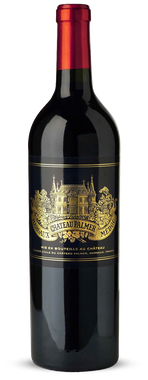
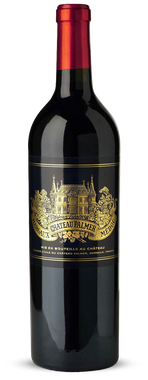
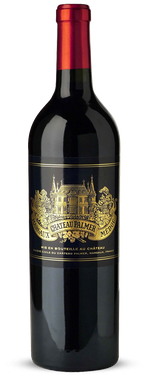
Tonight is no different at the Cape Winemakers Guild technical tasting hosted by member Miles Mossop. Hidden down a mountainous corridor in the Banghoek is De Zeven Guest Lodge—where in a long, narrow room, wall-to-wall Guild members nose glasses of Palmer.
Flowers, fruit, spice. The defining characteristic of Palmer is its velvet finesse. The line between the vintages is made of silk; smooth yet with a definite, focused structure. Out of all the châteaux, Château Palmer is the one that perhaps celebrates and showcases vintage variation the best.
The Château’s export director, Christopher Myers, has flown down to conduct the tasting with Miles. The Guild hosts eight of these technical tastings a year.
“It’s why the CWG was originally formed,” explains Miles. “A group of winemakers got together in the 80s, who due to isolation were not able to access much knowledge from outside of South Africa. The industry then was dominated by SFW, KWV and the co-ops. The original name of the CWG was the Cape Independent Winemakers Guild referring to independent wineries and winemakers not connected to the big cellars. They wanted to get together taste different wines, have discussions and debates and learn from these tastings. The Auction only came later.”
Miles visited Château Palmer in 2016 and was drawn not only to the outlier philosophy but also to the strategic thinking. “They stick to an approach and don’t stray from it. They also manipulate the market by releasing only half a vintage at a time, hold back and then release the balance of the vintage a few years later. This keeps the prices high and stable.”
The virtues of gravel
Château Palmer was classified as one of fourteen troisièmes crus (third growths) in the Bordeaux Wine Official Classification of 1855. But like everything else, Palmer won’t be defined by its arbitrary ranking, being consistently hailed as a ‘super second’, the quality of the wines crests towards first growth status.
It's home is a long strip of land that sits between the Atlantic Ocean and the Gironde estuary. One of the secrets to its success certainly lies in its soils. Gravel terraces with ancient deposits from the Garonne and Dordogne rivers make for exceptional grape-growing terroir. Palmer is planted to 66 hectares comprised of 47% merlot, 47% cabernet sauvignon and 6% petit verdot. The merlot is planted on the top slopes.
The Château’s focus is on merlot, even though they’re actually left bank. That being said it doesn’t always dominate the blend. Chris illuminates this leftfield enigma for us.
“The reason why Palmer has such a high percentage of merlot is because when the property was bought in the late 30s by four friends [two of them still own it today, the Mahler Besse and Sichel families], one of them loved merlot so much, that whenever he bought a château, he planted merlot [Pichon Comtesse, Siran and Coufran]. That was M. Miailhe.
“Merlot planted on warm soils like we have, displays soft, elegant tannins and a wonderfully deep mid-palate.
We taste vintages 2015, 2011, 2010, 2009, 2008, 2006 and 2005. It’s an intimate look at this Château, a rare privilege.
One of the standouts for me is the 2005—a vintage where France was going through one of the most severe droughts of their recent history. This resulted in small berries, low yields and gradual concentration of flavour intensity in the grapes. The wine is densely concentrated, unfurling from the glass are violets, blackcurrants, dark plums, graphite and roasted fennel. A juicy, fresh acidity and mouth-coating tannins add structure to the richness and weight.
Likewise the 2011 carries its difficult vintage with aplomb. A growing year characterised by early budding, water stress and hail. It was also the year that saw the introduction of optical sorting; it produced the lowest yield since 1961.
2011’s alcohol level didn’t quite reach the desired 13, 5 %, but in turn the wine is fresher, more lively. The tannins are tight and concentrated, the fruit pure and precise.
The cow jumped over the moon
The idea to move the farming over to biodynamics started out as an experiment. Chris elaborates: “In 2009 Thomas Duroux our CEO, and Sabrina Pernet our technical director, decided to test out 1-ha of biodynamic farming.
“The thinking was that we have been making wine for over 200 years, and have only been using pesticides, herbicides and the like for the last 60, so why can’t we go back to making wine like we used to?”
By 2014 Château Palmer was 100 per cent biodynamic.
“It’s not easy being biodynamic in Bordeaux, as the region does have a high rainfall, but we believe it’s the future.”
What drives them forward is the belief that this method is the return to the essence of farming. ‘To move away from monoculture and to recreate a living agricultural organism’.
Amongst this dynamic eco-system are sheep, goats and the endangered Bordelaise cows, compost and biodynamic preparations are made from their manure.
Even the native yeasts play their micro-part. The Château make their own natural yeast by picking grapes a week before harvest and packing them in milk containers to get the indigenous yeasts going. “Lab yeasts are safer, but more boring when coming to winemaking… Indigenous yeasts give more complexity in aromas, flavours, texture, and it is in line with biodynamic farming. The property is a self sufficient eco-system!” enthuses Chris.
Alter Ego & the Historical XIX Century Blend
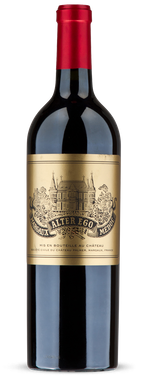
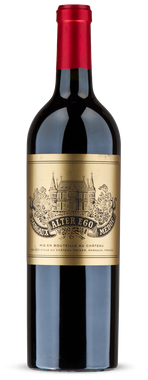
They have another wine—not a second wine, but rather another expression of Palmer, called The Alter Ego, which you’re meant to drink while the Palmer is ageing in cellar. Palmer needs 10 to 12 years to open up, while the Alter Ego benefits from 5 to 10 years.
It’s luscious where the Palmer is fine. The maiden vintage was in 1998, and has since gone on to create a following in its own right. We taste the 2015: plush black cherry and tobacco spice, turned soil, cassis and blackcurrant chewiness with ripe, realised tannins.
The wildest card of the evening is the Historical XIX Century Blend 2014, a blend of 45 per cent merlot, 45 per cent cabernet—and 10 per cent Rhône syrah.
It’s an homage to wines made in the 19th century when it was common practice to ‘hermitage’ wines. Bordeaux châteaux would add a quantity of wine from the Rhône, whose syrah was said to improve the ‘structure and power of the claret’.
“Only four people know where the syrah comes from,” laughs Chris. “The owner in northern Rhone, our CEO Thomas Duroux, who chooses the wine, the driver who brings the two barrels back, and our accountant who pays the Rhône producers invoice…”
On my way home I reflect that if the intention of these CWG Technical Tastings is to learn, then tonight has fulfilled that promise. But there’s perhaps one thing I’ve learnt above all else: with Château Palmer there are no bad vintages, only complicated ones.