The rules governing French appellations d’origine are so arcane that even chess grandmasters admit defeat. When those rules are applied in Burgundy, where the classification system includes a pyramid which ascends from regional wines to Grand Cru via village wines, village wines from a designated “climat” to Premier Cru, thence to single site Premier Crus before attaining the heights of Grand Cru, you can see their difficulty. I have omitted from this summary the side show of Chablis, where a Grand Cru does indeed signify a better site than a Premier Cru, but not a wine equal to a Grand Cru from the Cote d’Or.
These rules were established over an extended period of time, but only became enshrined in law in the 1930s. From that point onwards the die had been cast. Changes are infrequent and require a formal and lengthy petition process to the National Institute of Origin and Quality (INAO). When it does happen, it is only achievable for plots (called climats) within certain existing appellations.
Local winegrowers must formally petition the INAO, typically through a local syndicat viticole. They are obliged to provide a comprehensive document detailing historical, geological, and climate data for the specific climate to demonstrate its superior quality. They may have to include evidence of historical reputation and the economic importance of the vineyard. For a promotion even to be considered, the vineyard must meet - and have a history of exceeding - all the strict regulations associated with the higher classification.
Expert tasting panels then review the submissions to evaluate whether the wine’s taste, typicity, and ageing potential meet the requisite standard. The opinions of other stakeholders are then sought – and owners with vineyards in the category to which the applicants wish to be placed are free to object (which they often do since they obviously fear status dilution). Unsurprisingly, there have been very few upgrades to Premier Cru and none to Grand Cru in the past four decades.
The region that has seen the highest number (in relative terms) of these upgrades has been the Maconnais, where for the first time sites in Pouilly Fuissé, Pouilly Loché and Pouilly Vinzelles now enjoy Premier Cru status.
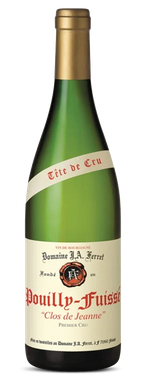
We have just landed a shipment which includes the first ever Pouilly Fuissé 1er Cru to land in South Africa - Domaine Ferret Pouilly-Fuisse Clos de Jeanne 1er Cru 2023.
The climate of Clos de Jeanne is a gently sloping east-facing single parcel located between the house of Domaine Ferret and the village church. It covers 0.69 hectares and was previously known as “Les Perrieres” but now bears the name of Jeanne Ferret. The youngest vines are 35 years old; the remainder have now passed their half-century.
The deep, sandy loam soils of the Clos de Jeanne are derived from sedimentary clays and are free of any stony material. The bedrock features seams of limestone and marl-limestone.
Fermentations and ageing take place in oak barrels of which 25% are new. The final stage of ageing is in stainless steel on fine lees for another nine months.