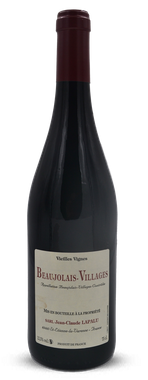
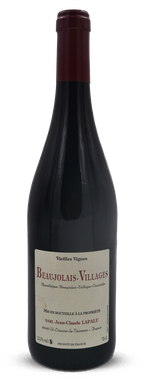
I guess you could say that Beaujolais and I got off to a rocky start. It was a chilly morning in December of 2012, and Gosia and I were browsing the wine aisle of a Parisian supermarket. With the end of our semester abroad looming, we were just two broke girls, looking for something reasonably priced to go down with the farewell dinner we planned to cook that evening for our French flatmates.
For the preceding fortnight, brightly coloured gondola ends had been shouting at us with row upon row of bottles emblazoned with the text “BEAUJOLAIS NOUVEAU.” The marketing had clearly worn us down, as after a few minutes of attempting to decipher the labels of Château This and Château That in the Bordeaux section, Gosia and I exchanged a wary glance and agreed to follow the path of least resistance. We picked a cheerful-looking bottle of Beaujolais Nouveau with an equally cheerful price and left Carrefour optimistic that we had made a savvy call.
Hot Pink
That evening, just as Gosia was removing her piping hot gołąbki from the oven, the couple we were staying with returned home. Immediately, their eyes were drawn to the hot pink-labelled Beaujolais Nouveau - and on their faces was an expression that moved swiftly from bewilderment to horror. “That is not wine,” Virginie explained in shaky English, with little effort to hide her disgust. In agreement, Romain proceeded to retrieve some bag-in-box Bordeaux from a cabinet in the hallway. “We’ll drink this instead,” he insisted while gingerly removing the offending bottle from the dinner table. “Beaujolais is party wine.”
The following day, we decided to sample our scorned selection. Like the bright fuchsia hue of the liquid suggested, it tasted light and leaning towards tutti frutti. Admittedly, it did perhaps have more in common with cranberry juice than wine, but it was still wine, in all its 11% ABV glory. It really wasn’t that offensive.
Beaujolais: An affront to the wine world?
It would be almost two years before we would encounter Beaujolais again - this time, as full-time Wine Business Masters students in Burgundy. We quickly learned that despite our generous French embassy scholarships, our rands did not go particularly far when purchasing wine (not unexpected when the world’s most expensive wine is produced a 30-minute drive from your front door). But we were thirsty, and we wanted to drink. It was at that point we were let into a secret by our fellow third world students: better to drink a decent mid-range wine from Beaujolais, the region just south of Burgundy, than an entry-level Bourgogne. But hang on a second - what about that traumatic Beaujolais Nouveau incident back in 2012? Wasn’t Beaujolais an affront to the wine world?
Nouveau
The short answer turned out to be no: absolutely not. You see, like our dear French hosts, we had confused the entire Beaujolais region with an annual marketing exercise that has taken place since 1951. Back then, some members of the Union Interprofessionnelle des Vins du Beaujolais (UIVB) saw the potential to take advantage of the fact that many Beaujolais wines produced from the light red Gamay Noir grape can be drunk young - as early as six to eight weeks after harvest - and thus was conceived an elaborate race carrying the first bottles of the new vintage to Paris. Over the subsequent decades, media coverage snowballed as far as Japan and the US, resulting in lavish Beaujolais Nouveau release celebrations that reached peak popularity in the 80s (think the grownup version of a midnight Harry Potter book sale).
But what goes up, must come down. The sensational novelty of Beaujolais Nouveau was a double-edged sword. While it helped in finding a home for a large percentage of the region’s wines shortly after harvest (and let’s face it, who doesn’t appreciate good cash flow), it simultaneously resulted in the higher quality wines of the Beaujolais crus being forgotten and devalued.
But it’s not all doom and gloom. This chain of events has resulted in the best winemakers of the ten Beaujolais crus and 38 villages pulling out all the stops to prove that the region can produce truly outstanding wines, without commanding the stratospheric prices from other famous regions that are unattainable for many (yours truly included).
The Renaissance
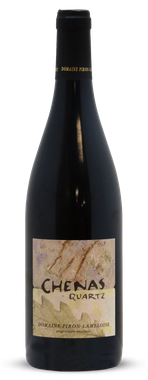
And so dawned the Beaujolais Renaissance. It has never been a better time to discover Beaujolais wines. From the lighter, floral notes of Fleurie and Chénas to the bolder, more structured wines of Morgon and the charmingly named Moulin-à-Vent (windmill), there are delicious Gamays to suit every occasion and pocket. For now, that is. As Beaujolais’ cult following grows, surely the prices will follow. As it stands today, if you walk into a trendy wine bar anywhere from London to Shanghai, it will be surprising to not find a good Beaujolais on the list. Trust me, it’s a thing.
Ground Zero
Beaujolais is also ground zero for glou glou wine. Emulating the French sound for glug glug, glou glou equates to wines that tend to be juicy, low in alcohol and tannin (in Beaujolais’ case, the latter having a fair amount to do with carbonic maceration) and, overall, irresistibly drinkable. These are thirst-quenching wines, intended to be glug-glug-glugged and enjoyed without over-analyzing: which in a world dominated by sniffing and swirling, is refreshing on a number of levels.
Glou Glou
Beaujolais is the glou glou we should be drinking braai-side, lightly chilled with good food and good company. It’s the kind of wine you can take home to your parents - provided they aren’t too uptight.
It took a bit of time to work through the miscommunication, but in the end, Beaujolais won me over - and now we’re in a better place than ever. In some ways, it is a love I guard jealously, but one which is also too good not to share.