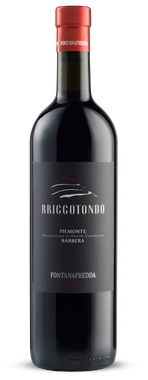
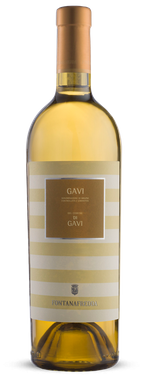
Fellini was a Roman Director, Italian, though if you speak to Italian people, they would draw the distinction that he was a Roman {seemingly BEFORE he could be distinguished as an Italian}. I guess it makes sense. When people tell me about someone I don’t necessarily know and say: “Ah, but you know, he/she is from Johannesburg.” I nod, sagely, knowing full well that a Johannesburger and a Capetonian speak two very different languages (or if the same language, then at very least with a different inflection – not like Zuma’s em-PHA-sis mind you). So it would seem the same holds true in Italy, though Fellini, irrespective of his Romanesque tendencies, embodies an ethos that can be disentangled from any one place and made to fit elsewhere. His very name is used as an adjective, ‘Fellinian’ or ‘Felliniesque’, and represents a kind of extravagant, fantastical, dreamlike outlook on life, usually autobiographical in some way, but always in an attempt to illustrate something real. It’s very much how we tend to SEE Italy and Italians in general: flamboyant, aspirational, loud, authentic, demanding, extravagant, yet thoughtful and detailed…and loud. Did I SAY loud? Because I mean, LOUD (metaphorically).
8 ½
Obviously best known for his film ‘La Dolce Vita’, it is the lesser known ‘8 ½’ that serves my purposes today. Named for the 8 ½ films Fellini had made up until then (1963), it chronicles a famous Italian film director’s creative block. In his quest to make a film about something honest, simple even, he discovers his need for the people in his life… and the idea that creativity, genius even, does not occur in isolation, it occurs in life. The people and environment around you. Which, as in all things (I’ve found), is a concept applicable to the art of winemaking, and in this case, specifically to the art of winemaking in Northern Italy’s Piemonte region. ‘Piemonte’ having been named ‘At the foot of the hills’, situated as it is between the Alps in the North, the Apennines Mountain Range in the South and the Mediterranean Sea in the West(ish). The area’s fingerprints are all OVER the wine and most probably WHY wines from here are some of the most prized in Italy.
Nebbia
For one thing, the geographical location of this area, what with the hills/mountains, the frost from the Alps and the heat from the Mediterranean, produces a trademark fog, Nebbia in Italian. This fog burns off slowly during the day, and makes grapes grown on Southerly facing slopes destined for great things. So much so, that the Nebbiolo grape, key ingredient to both Barolo and Barbaresco wine, is in fact named for the fog that tempers it so well. As we’ve learnt however, the difference between one tiny town’s Barolo and another tiny town’s Barolo just down the road can be astounding. As it is, there are around 13 DOC and DOCG certified wines that are made of the Nebbiolo grape in Piemonte – the Barolo generally more tannic and prone to age than the lighter style Barbaresco wines.
You Exist Only In What you Do
Another less famous, but generally more accessible red grape from Piemonte, the Barbera grape only has 2 DOCG certified areas, Barbera d’Asti and Barbera del Monferrato Superior, making it easier to pin down, or easier to define. You can drink it earlier and more regularly than your Barolo with its dark, black cherry, anise and dried herb flavour profile (and less expensive price tag). However, before one starts listing ALL the grape varietals from the area, it might be more prudent to put it into perspective, there being a total of 59 regions WITHIN Piemonte, with a comparable level of intricacy involved when it comes to individual towns. Suffice to say that Piemonte is the 6th largest producer of wine by volume in Italy, producing more DOCG designated wines than any OTHER region. Given its proximity to both France and Switzerland, and the influences of both over the centuries we’d venture to say, BASED on authentic Italian feedback, that Piemonte, in our view of Italy and Italian winemaking regions as ‘Fellinially-driven’, is less ‘La Dolce Vita’ and more “You exist only in what you do.” (in the words of the master). Hence putting an emphasis on quality, hard work and designation-driven winemaking. You’ll find ratings to match for the Nebbiolo-dominant reds, while with regard to white grape varietals we’d strongly suggest the Moscato Bianco (fizzy) and the Cortese (a close cousin of my favourite Pinot Grigio).
Given the evidence, as an autobiography, the wine suggests a life well-lived. We’d strongly recommend it.