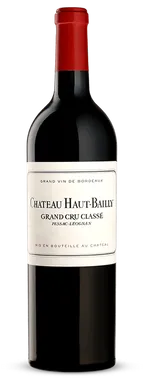
I was introduced to the wines of Château Haut-Bailly by the late Martin Bamford, who ran the Gilbey’s Loudenne fine wine brokerage and who was my first real mentor when it came to discovering the wines of Bordeaux. Through Martin, the late John Davies MW at Château Lascombes and the pretty much immortal John Salvi MW (a legendary trio of Englishmen who were the custodians of a British presence in Bordeaux which dates back to the marriage of Henry II to Eleanor of Aquitaine in 1152) I enjoyed a rollercoaster ride of discovery of the great and sometimes forgotten treasures of the Médoc.
Unless you have had infinite time, unlimited resources, and have spent your lifetime in the pursuit of vinous pleasures, it’s unlikely that you can say with any confidence that you have an intimate knowledge of the wines of a particular estate or terroir. When it comes to knowing and understanding great wine you need to have a drinking knowledge spread over many decades. This is a costly activity, particularly since the 1990s when wine prices started to escalate well ahead of the ordinary inflationary indices.
I’ve been fortunate enough (being in the right place at the right time) to be able to make this claim (admittedly tentatively) about a few Bordeaux properties, some for the most obvious reasons, such as knowing the proprietors well, spending time in the cellars with their cellarmasters, others for more obscure reasons. Among these, the most common has been the happenstance discovery of the wine early on in my career and then simply being seduced by it. I am sure this is true of a favourite artist, a favourite composer, a favourite author.
This certainly explains my relationship with Château Haut-Bailly, the splendid estate in the Graves region (Pessac-Léognan, to be precise) whose wines I have been drinking for pretty much half a century (don’t ask, I started very young) and of which I still have bottles celebrating their 60th anniversary this year.
The true origin of Château Haut-Bailly is shrouded in the mists of antiquity: the website shows a history of production in the region as far back as the 15th century, and says that “the foundations of the modern vineyard were laid in the 17th century, when Firmin Le Bailly and Nicolas de Leuvarde gave it its current boundaries.” However, Clive Coates, in his monumental “Grands Vins,” says that the first record he can find of its existence is in the second edition of **Wilhelm Franck’s Traité sur les vins du Médoc.”
It’s possible that both are correct: the vineyards are in the heartland of the Pessac-Léognan appellation. As the surrounding Château Carbonnieux and Château La Louvière gained reputation the elevated site along the ridge was cleared of trees and scrub and vineyards were established. However, there’s no dispute about the strength of its reputation from the last quarter of the 19th century. Price lists from Nicolas in Paris in the 1930s show great 19th-century vintages selling for more than Lafite, Latour and Margaux.
Château Haut-Bailly did not exactly flourish in the first half of the 20th century. Political and economic conditions were tough and it was passed from one undercapitalised owner to the next until it was purchased in 1955 by Daniel Sanders, a Belgian by birth, who had married the daughter of a Bordeaux négociant.
Fortunately for aficionados of Château Haut-Bailly, Sanders recognised the value of an old block of vines planted by Alcide Bellot des Minières, who bought the estate in 1872. In 1955 this portion of the pre-phylloxera vineyard still comprised 25% of the property and included inter-plantings of Carménère. The discovery that the heart of Château Haut-Bailly was made up of vines of such antiquity is partly what made me keen to build up a stock of back vintages whenever I found the wines in the market.
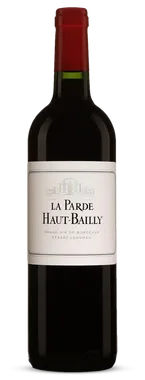
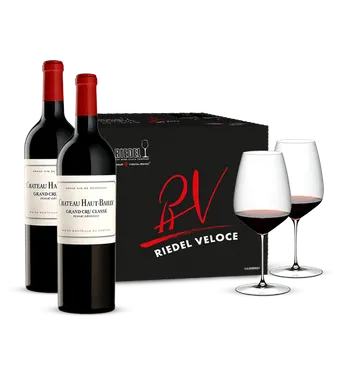
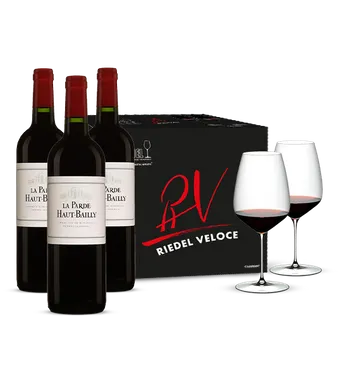
Two years ago Véronique Sanders visited South Africa, together with Château Kirwan’s Yann Schyler and Château Branaire-Ducru’s François-Xavier Maroteaux. At the time of her visit we were able to secure small stocks of more mature vintages. These were imported at the time that the rand was at its weakest, while prices out of Bordeaux were solid. We still have small quantities of these wines available. Recognising the changed circumstances of the Bordeaux wine trade, we are offering these at reduced prices which are more in line with the current situation and current exchange rates.
We have also been fortunate in securing some of the legendary 2016s, scored at a perfect 100 by Jane Anson, which will arrive here later this year, and which will be sold on a subscription basis (commit now in order to secure your allocation).